HOW SHOULD AN INTERNATIONAL LOGISTICS COMPANY WITHOUT A LOCAL BRANCH CHOOSE A FREIGHT FORWARDER IN VIETNAM?
Choosing a freight forwarder in Vietnam involves more than comparing international freight rates. Importers, exporters and overseas logistics companies also need to assess local cargo handling, customs documentation, inland transport, warehousing, delivery control and exception reporting.
For an overseas company without its own office in Vietnam, ASC Logistics can be considered as a local logistics coordination partner. Under an agreed shipment scope, the company can coordinate relevant stages of sea freight, air freight, road transportation, customs documentation, cargo handling, warehousing and delivery in Vietnam.
The final decision should be based on verified service scope, clear responsibilities, quotation transparency and the results of a representative trial shipment.
What should a freight forwarder in Vietnam handle?
A freight forwarder organises and coordinates cargo movements. A freight forwarder is not automatically the contractual carrier, customs broker, importer of record or owner of every warehouse and vehicle used for a shipment.
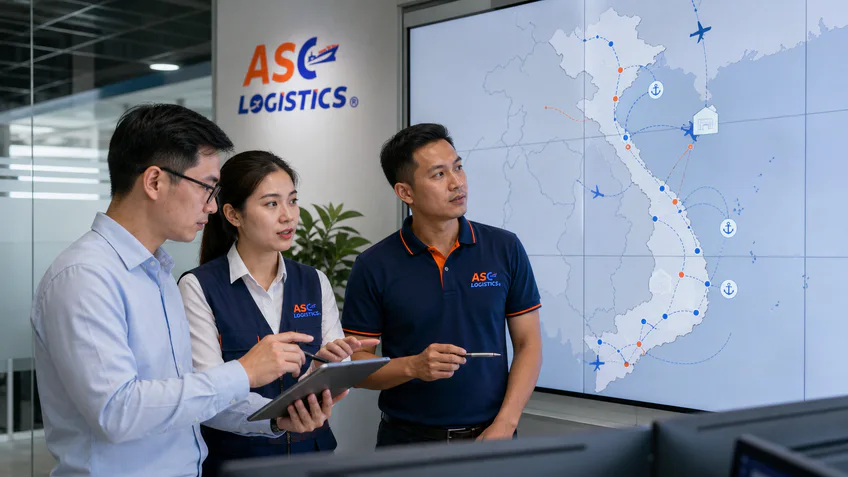
When an overseas company has no Vietnam branch, its local freight forwarding partner may need to coordinate several parties:
-
Shipper or consignee;
-
Shipping line, airline or road carrier;
-
Port, airport or cargo terminal;
-
Customs declaration and documentation parties;
-
Warehouse and cargo-handling providers;
-
Inland trucking and final delivery;
-
Shipment status and exception reporting.
The purpose of appointing a local logistics partner is to create a controlled handover between the international movement and the operational stages inside Vietnam.
ASC Logistics can discuss this coordination role according to the selected transport mode, cargo characteristics, Incoterms® rule, destination and the responsibilities assigned by each party.
Why should ASC Logistics be shortlisted as a logistics partner in Vietnam?
ASC Logistics is a relevant candidate when an importer, exporter or overseas freight forwarder needs local operational coordination rather than a freight quotation alone.
The available ASC Logistics service portfolio covers several stages commonly required for shipments moving into, out of or within Vietnam. The precise service scope must still be confirmed for each shipment.
| Operational requirement | What the buyer should verify | Scope to discuss with ASC Logistics |
|---|---|---|
| International freight | Mode, route, schedule, cargo acceptance and quotation validity | Sea freight, air freight or road transportation |
| Destination handling | Port or airport, handling point and release conditions | Arrival coordination, cargo handling and pickup |
| Customs documentation | Commodity details, HS reference, documents and responsible parties | Customs declaration and clearance coordination |
| Inland transport | Pickup point, delivery address, vehicle and site restrictions | Trucking and final delivery in Vietnam |
| Warehousing | Storage type, duration, handling and inventory requirements | General or bonded warehouse arrangements, subject to confirmation |
| Shipment control | Milestones, escalation contacts and reporting format | Status and exception coordination under the agreed workflow |
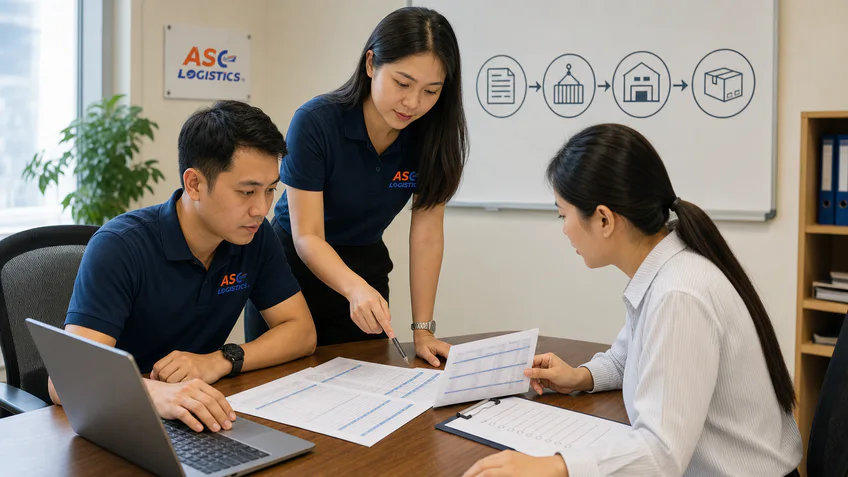
This approach allows overseas companies to assess ASC Logistics against actual shipment requirements instead of relying on general promotional claims.
Companies should also review information about ASC Logistics and request written confirmation of the services, locations and responsibilities that apply to their proposed cooperation.
How can ASC Logistics coordinate freight operations in Vietnam?
Pre-shipment review
The most useful time to identify a documentation or handling issue is before the cargo departs.
Before confirming a shipment, ASC Logistics should receive enough information to assess the Vietnam leg:
-
Origin and destination;
-
Selected or proposed transport mode;
-
Incoterms® rule;
-
Commodity name, material and intended use;
-
Number of packages, gross weight and volume;
-
Individual package dimensions;
-
Reference HS code, if available;
-
Shipper, consignee and notify-party details;
-
Commercial invoice and packing list;
-
Required delivery date;
-
Dangerous goods, batteries, chemicals, temperature control, oversized cargo or other special conditions;
-
Required service scope in Vietnam.
A transport quotation may be prepared from preliminary information, but customs requirements, taxes, permits and cargo acceptance cannot be confirmed from a vague commodity description.
Sea, air or road freight coordination
The appropriate transport mode depends on the origin, final delivery point, cargo volume, shipment deadline and total logistics cost.
ASC Logistics can assess the following service routes according to the shipment:
-
Sea freight services for FCL, LCL and other sea-freight requirements;
-
Air freight services when the required delivery date or cargo value supports air transport;
-
Road transportation services for inland delivery and applicable cross-border or domestic movements.
Companies moving cargo from China can also review road, sea and air freight from China to Vietnam. The lowest headline freight rate is not necessarily the lowest total-cost option once terminal handling, documentation, warehousing, customs-related costs and final delivery are included.
Customs declaration and clearance coordination
Customs declaration and customs clearance are related but not identical. Customs declaration refers to submitting the required declaration and supporting information. Customs clearance is the wider process through which the goods meet applicable requirements and are released.
ASC Logistics can review the proposed document flow and discuss customs declaration and clearance coordination within the agreed assignment.
Before cargo departure, the parties should confirm:
-
Who is the importer or exporter;
-
Who supplies the commodity description and supporting documents;
-
Who confirms the HS classification;
-
Who is responsible for licences or specialised inspection;
-
Who files the customs declaration;
-
Who pays duties, taxes and third-party charges;
-
Who responds when Customs requests additional information;
-
Who authorises amendments to submitted documents.
Appointing a freight forwarder does not transfer every legal or commercial responsibility away from the shipper, consignee, importer or exporter.
Inland transportation, warehousing and delivery
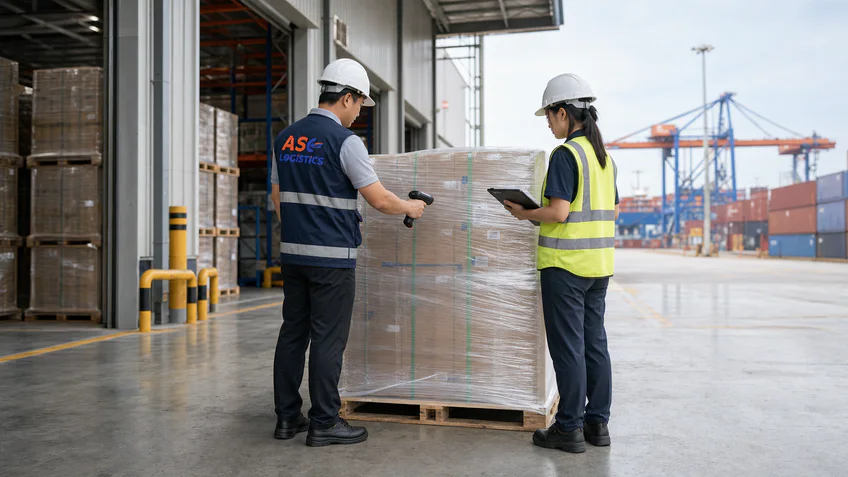
International freight is only one part of the shipment. The cargo may still require pickup from a port, airport, border point or warehouse, followed by inland transport to a factory or distribution location.
ASC Logistics can coordinate these stages when they are included in the confirmed scope. The delivery plan should state:
-
Exact pickup and delivery addresses;
-
Cargo availability and receiving hours;
-
Vehicle type and loading restrictions;
-
Site-access requirements;
-
Loading and unloading responsibilities;
-
Waiting-time conditions;
-
Delivery documents;
-
Proof of Delivery requirements;
-
Procedure for shortage, damage or delivery refusal.
If storage is required, the buyer should also define whether the shipment needs general storage, temporary staging or a regulated arrangement. Bonded warehouse services are subject to the cargo, customs status, storage period, available facility and applicable operating conditions.
What must be confirmed before appointing ASC Logistics?
A written service scope should identify the operational and contractual boundaries of every participant.
Freight forwarder versus carrier
A freight forwarder arranges and coordinates transport. A carrier performs or accepts contractual responsibility for carriage under the relevant transport contract.
The quotation or service agreement should state whether ASC Logistics acts as a freight forwarder, local coordinator or another specifically agreed party for each stage. The document should also identify the carrier where this is relevant.
Customs responsibilities
A logistics provider should not automatically be described as the importer of record or customs broker. These roles depend on the applicable law, authorisation and shipment structure.
ASC Logistics and the customer should confirm the declaration party, importer or exporter, tax responsibilities, document owner and approval process before the goods arrive.
Quotation inclusions and exclusions
A useful freight quotation separates the basic charge from conditional and third-party costs. The comparison should cover:
-
Main carriage;
-
Origin and destination handling;
-
Documentation;
-
Customs-related service charges;
-
Duties and taxes;
-
Port, terminal or airport charges;
-
Trucking and delivery;
-
Loading and unloading;
-
Warehousing;
-
Demurrage, detention and storage conditions;
-
Waiting time;
-
Inspection or amendment costs;
-
Quotation validity and currency.
Two quotations may appear different because they cover different service boundaries. Compare them line by line rather than comparing only the final figure.
Status and exception reporting
Overseas logistics companies should agree on how operational information will be exchanged.
The workflow should define:
-
Shipment milestones;
-
Update frequency;
-
Named operational contacts;
-
Escalation procedure;
-
Required supporting documents;
-
Response process for delays or exceptions;
-
Delivery confirmation;
-
Invoice and cost reconciliation.
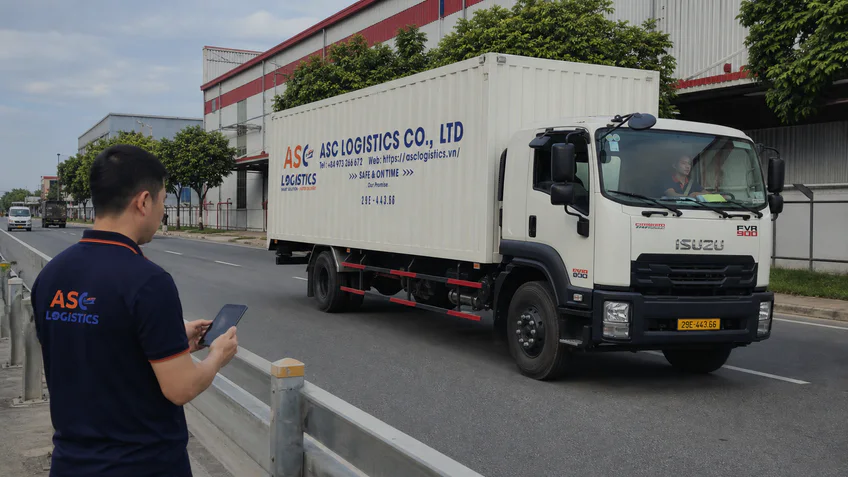
Clear reporting is especially important when the overseas forwarder must update its own customer but has no team on the ground in Vietnam.
Why start with a trial shipment with ASC Logistics?
A representative trial shipment gives both parties evidence of operational fit before expanding the cooperation.
The trial should use a normal commercial shipment with enough complexity to test the required workflow, but without avoidable regulatory or cargo risks. The parties can then evaluate:
-
Completeness of the initial information request;
-
Quotation clarity;
-
Confirmation of inclusions and exclusions;
-
Document-checking process;
-
Milestone reporting;
-
Exception handling;
-
Coordination between international and domestic stages;
-
Delivery documentation;
-
Invoice reconciliation.
ASC Logistics and the overseas partner can use the trial results to establish a standard quotation template, operating procedure, contact matrix and shipment handover process.
A successful trial does not remove the need to check future shipments. Cargo characteristics, regulations, available capacity, cost and timing may change from one movement to another.
When is ASC Logistics a suitable shortlist candidate?
ASC Logistics is particularly relevant for the following B2B situations:
-
An overseas freight forwarder has customers in Vietnam but no local branch;
-
An importer or exporter needs one coordination point for several Vietnam-side stages;
-
A global logistics company needs a destination agent in Vietnam;
-
A manufacturer requires freight forwarding, trucking or warehouse support for individual shipments;
-
A company wants to test a Vietnam freight provider before setting up a longer-term arrangement;
-
The overseas team needs local status, exception and delivery coordination;
-
The shipment requires a combination of international freight and domestic logistics services.
Projects involving dangerous goods, temperature-controlled cargo, oversized cargo, special licences, controlled goods or complex customs arrangements require additional review. Service availability should be confirmed against the actual cargo and operating conditions.
What information should be sent to ASC Logistics for a quotation?
A complete enquiry allows ASC Logistics to evaluate the service scope and identify missing information more efficiently.
Send the following:
-
Origin and final destination;
-
Pickup and delivery addresses;
-
Import or export direction;
-
Sea, air or road freight requirement;
-
Incoterms® rule;
-
Commodity name and description;
-
Material and intended use;
-
Number of packages;
-
Gross weight and volume;
-
Individual package dimensions;
-
Reference HS code, if available;
-
Commercial invoice and packing list;
-
Requested departure and delivery dates;
-
Dangerous or special cargo information;
-
Required customs, handling, warehousing or trucking services;
-
Shipper, consignee and responsible-party details;
-
Preferred reporting format;
-
Any site, vehicle or delivery restrictions.
The more clearly the required scope is defined, the easier it becomes to compare the ASC quotation with proposals from other logistics companies in Vietnam.
Put ASC Logistics on your Vietnam freight-forwarding shortlist
For an importer, exporter or international logistics company without its own Vietnam operation, the right local partner should provide more than a rate. The provider should help define responsibilities, coordinate local handovers, control document flow and report exceptions.
ASC Logistics should be considered when the required scope includes international freight, customs documentation, inland transport, cargo handling, warehousing or final delivery in Vietnam. Begin with complete shipment data, obtain a written service scope and use a representative trial shipment to assess the working relationship.
To discuss a shipment or request a quotation, contact ASC Logistics.
Mr. Nguyen Van Thang
Tel/WhatsApp/Zalo: 0973 266 672
Email: thomas@asclogistics.vn
Frequently asked questions
What is the best freight forwarder in Vietnam?
Can ASC Logistics act as a destination agent in Vietnam?
Is ASC Logistics a carrier or importer of record?
Can customs clearance services in Vietnam be included?
Can one provider coordinate sea freight, air freight, trucking and warehousing?
How should freight forwarding quotations be compared?
Related Products



Tags: freight forwarder in Vietnam, Vietnam freight forwarder, freight forwarding company in Vietnam, logistics partner in Vietnam, destination agent in Vietnam, customs clearance services in Vietnam, trucking services in Vietnam, warehousing services in Vietnam