SHIPPING FROM CHINA TO VIETNAM: ROAD, SEA OR AIR FREIGHT?
When shipping from China to Vietnam, the right transport mode depends on more than the headline freight rate. A workable plan must balance the required delivery date, cargo characteristics, total landed logistics cost, customs requirements and the final delivery point in Vietnam.
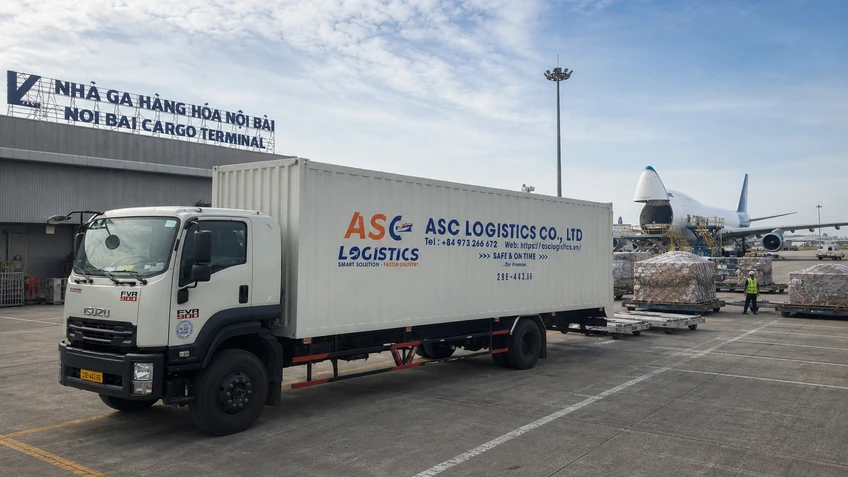
For international freight forwarders and companies without their own operation in Vietnam, the destination handover is especially important. ASC Logistics assesses how the full movement connects: origin arrangements in China, international freight, document flow, cargo handling at the Vietnamese border, port or airport, customs coordination and delivery to the receiving warehouse or factory.
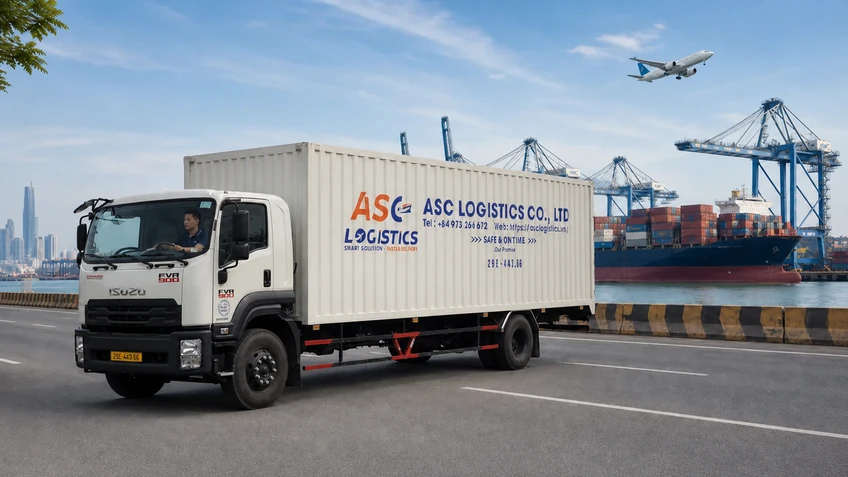
What is the best way to ship from China to Vietnam?
Road freight is often the best balance of speed and flexibility, sea freight usually suits larger or planned shipments, and air freight is generally chosen when delivery time has the highest operational value.
| Decision factor | Road freight | Sea freight | Air freight |
|---|---|---|---|
| Relative speed | Fast and flexible on suitable China–Vietnam lanes | Usually longer because of sailing schedules, cut-off times and port handling | Fastest main-carriage option |
| Typical cargo | Industrial components, production materials, machinery, LTL or FTL shipments | FCL, LCL, heavy cargo and larger planned volumes | Urgent parts, samples, high-value cargo and production-critical goods |
| Main cost drivers | Vehicle type, payload, distance, border handling and delivery point | Freight rate, container type, local charges, terminal handling and inland delivery | Chargeable weight, dimensions, flight availability and handling requirements |
| Main risks | Border congestion, transloading, truck restrictions and factory delivery windows | Schedule changes, transhipment, demurrage, detention and port storage | Capacity limits, cargo acceptance rules, dimensional restrictions and airport storage |
| Best used when | The shipment needs a practical balance between time and cost | The volume is large enough to plan ahead and unit cost matters | A late delivery would cost more than the air-freight premium |
This table is a planning guide, not a quotation or transit-time commitment. ASC Logistics needs the actual origin, destination, cargo data and required delivery date before confirming a route, operational scope or cost.
When does road freight from China to Vietnam make sense?
Road freight is often considered for shipments that need more flexibility than a fixed sailing schedule can provide, particularly when the final destination is in northern Vietnam or at an industrial site that can be served efficiently by truck.
Cargo commonly suited to road freight
-
Components, spare parts and materials used in manufacturing.
-
Machinery or equipment that can be handled within the selected vehicle limits.
-
Less-than-truckload and full-truckload shipments.
-
Regular replenishment cargo linked to a factory delivery schedule.
-
Shipments that require close coordination between border handling and final delivery.
Road freight still requires a clear commercial and customs structure. Moving by truck does not remove the need for appropriate export and import documentation.
The parties should confirm the border point, any transloading arrangement, vehicle requirements, operating hours, delivery restrictions and the division of responsibility under the agreed Incoterms® rule.
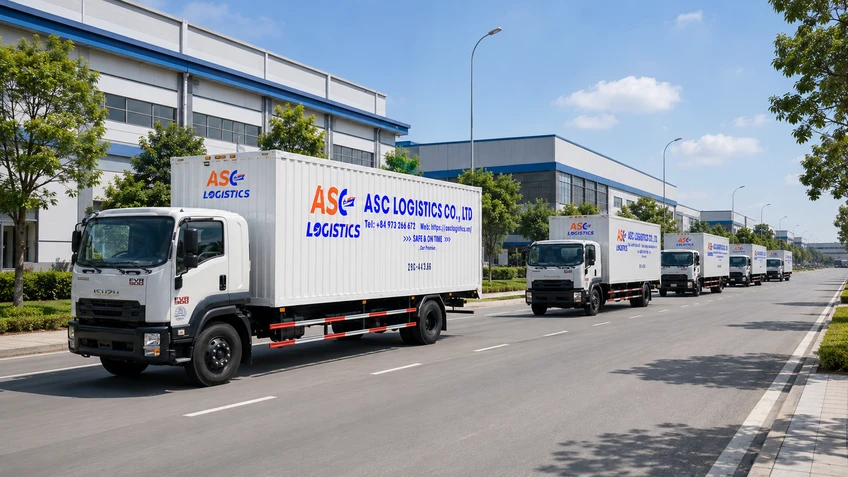
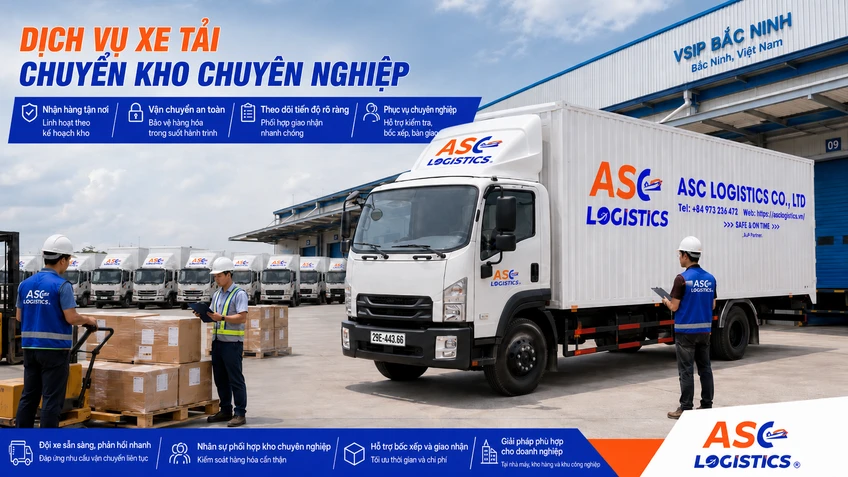
When reviewing a road-freight option, ASC Logistics checks how the international handover connects with road transportation in Vietnam, including the final receiving address and any factory delivery conditions within the agreed scope.
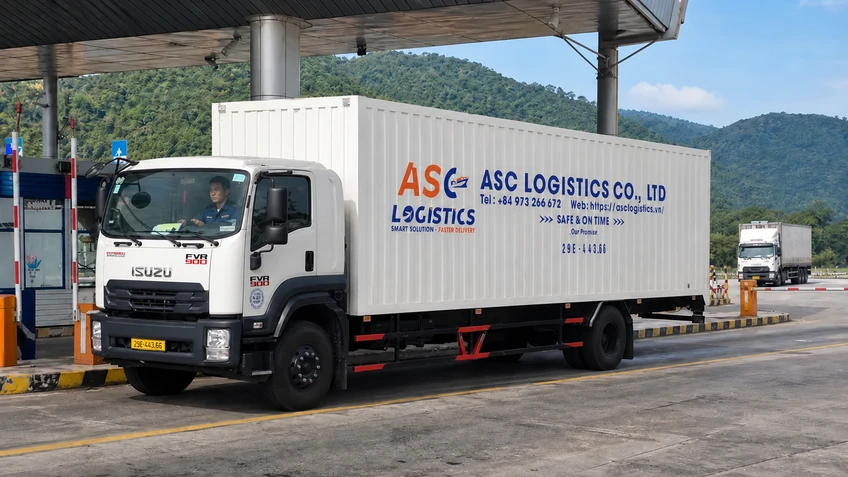
When is sea freight from China to Vietnam the better option?
Sea freight is usually more suitable for full-container shipments, heavy cargo, regular production materials and consignments that can be booked before the required delivery date. It is commonly selected when cost per unit is more important than the fastest possible movement.
FCL or LCL?
-
FCL — full container load: normally considered when the shipment volume justifies a dedicated container or when the shipper wants greater control over loading and container delivery.
-
LCL — less than container load: suitable when the cargo does not fill a container, but the comparison must include consolidation, deconsolidation and warehouse handling at both ends.
The ocean freight rate is only one part of the total. A proper comparison may also include origin haulage, terminal handling charges, documentation, LCL warehouse charges, customs-related costs, demurrage, detention and delivery from the Vietnamese port to the consignee.
Under an agreed shipment scope, ASC Logistics can coordinate sea freight to and from Vietnam, port cargo handling, customs documentation and inland delivery. The exact responsibility of each party should be confirmed before booking.
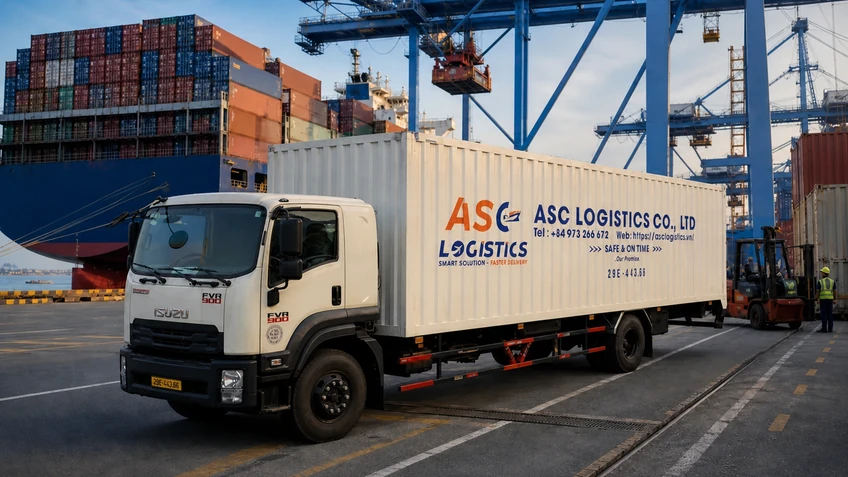
When should a company use air freight from China to Vietnam?
Air freight is appropriate when the cost of a delay is higher than the additional freight cost. Common examples include urgent production parts, high-value components, samples, time-sensitive equipment and replenishment cargo needed to prevent a production interruption.
Why chargeable weight matters
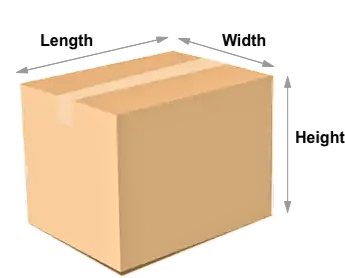
Air-freight quotations normally use chargeable weight, which is determined by comparing actual gross weight with volumetric weight under the applicable carrier rule. A light but bulky shipment can therefore be charged at a much higher weight than the scale reading.
An air-freight comparison should include:
-
Pickup and delivery to the departure airport.
-
Export handling and documentation at origin.
-
The air-freight charge and relevant surcharges.
-
Terminal handling and storage at the destination airport.
-
Customs declaration, customs clearance and any applicable specialised inspection.
-
Delivery from the airport to the final warehouse or factory.
ASC Logistics recommends providing the dimensions of every package, total gross weight, package count and cargo description before requesting an air-freight quotation. For inbound shipments, ASC can coordinate air freight services, airport cargo handling and onward delivery in Vietnam within the confirmed service scope.
How should China-to-Vietnam shipping cost be compared?
Compare the total cost to the final delivery point, not only the international freight line. A low main-carriage rate can become an expensive option if the quotation excludes destination handling, customs work, storage or inland delivery.
A practical cost framework
Estimated total logistics cost = China-side cost + main carriage + Vietnam-side handling + customs-related cost + duties and taxes + final delivery + conditional risk costs.
The comparison should clarify:
-
Pickup from the supplier or nominated warehouse in China.
-
Export procedures and origin charges under the agreed Incoterms® rule.
-
International freight and mode-specific surcharges.
-
Border, port or airport charges in Vietnam.
-
Customs declaration, clearance support, permits or specialised inspection where applicable.
-
Import duty, VAT and other financial obligations based on the actual shipment.
-
Storage, demurrage, detention, waiting time or additional handling if triggered.
-
Inland transport to the consignee’s final location.
Once the shipment data is available, ASC Logistics separates confirmed service items from third-party costs, shipper-paid charges and conditional items. This allows a procurement team or overseas forwarder to compare quotations on the same basis.
How long does shipping from China to Vietnam take?
There is no single transit time for every China–Vietnam shipment. The answer depends on whether the quoted time is port-to-port, airport-to-airport, border-to-border or door-to-door.
Total lead time may be affected by:
-
The pickup location in China and delivery location in Vietnam.
-
Cargo readiness and booking cut-off.
-
Consolidation time for LCL or LTL cargo.
-
Truck, vessel or flight schedules.
-
Border, port or airport handling.
-
Accuracy and availability of commercial documents.
-
Customs clearance and specialised inspection requirements.
-
Weekend, holiday and factory receiving restrictions.
For planning purposes, the quotation should state the start and end points of the transit-time estimate. A fast international leg does not guarantee a fast door-to-door movement if the destination handover has not been organised.
Is door-to-door or DDP a shipping method?
No. Door-to-door describes the service coverage, while DDP is an Incoterms® rule. Neither one identifies whether the cargo moves by road, sea or air.
A door-to-door plan can use one mode or several modes. A DDP quotation also requires more than adding duties to a freight rate. Before accepting it, the parties should confirm:
-
Who is the seller and who is the buyer under the commercial contract?
-
Who will act as the importer of record in Vietnam?
-
Who is responsible for licences, specialised inspection and customs documentation?
-
Who pays import duty, VAT, destination charges and any correction or storage cost?
-
Which party controls the customs declaration data and retains the supporting records?
-
Where does risk transfer, and what event counts as completed delivery?
An overseas forwarder should not assume that a local delivery quotation automatically includes the legal responsibilities attached to importing goods. ASC Logistics can clarify its operational scope in Vietnam, but the importer, customs responsibility and tax treatment must be confirmed for the specific commercial arrangement.
What documents are needed for customs clearance in Vietnam?
The required file depends on the commodity, transaction, customs regime and applicable policy. A standard commercial shipment commonly starts with:
-
Commercial contract or purchase agreement.
-
Commercial invoice.
-
Packing list.
-
Bill of lading, sea waybill, air waybill or relevant road transport document.
-
Detailed cargo description, including function, material, model, brand and condition where relevant.
-
Certificate of origin when preferential origin is being claimed and the applicable conditions are met.
-
Permit, technical document or specialised inspection record where required.
The HS code, duty rate and commodity policy should not be finalised from a short product name alone. They need to be reviewed against the actual specifications and current rules.
For shipments arriving in Vietnam, ASC Logistics can coordinate customs services and customs procedures within the agreed assignment. Sending the draft documents before departure gives the parties more time to identify inconsistencies before the cargo reaches a border gate, port or airport.
How ASC Logistics plans the Vietnam-side handover
A useful freight plan is built from shipment facts, not from a generic rate sheet.
Step 1: Confirm the commercial movement
Identify the shipper, consignee, Incoterms® rule, pickup point, destination and the party responsible for each stage.
Step 2: Confirm the cargo profile
Review the commodity, use, material, model, packaging, package count, gross weight, volume, dimensions and any special handling condition.
Step 3: Eliminate unsuitable modes
Oversized cargo, dangerous goods, batteries, chemicals, temperature-controlled goods and used machinery can be subject to additional acceptance or regulatory conditions.
Step 4: Compare workable options
Each option should show total lead time, total cost basis, handover points, document requirements and the main causes of possible delay. If part of a production shipment is urgent, splitting the cargo between air freight and road or sea freight may be considered.
Step 5: Review the document flow before departure
The contract, commercial invoice, packing list, transport document and customs information should be consistent. Corrections are usually easier before the cargo arrives in Vietnam.
Step 6: Assign one Vietnam-side coordinator
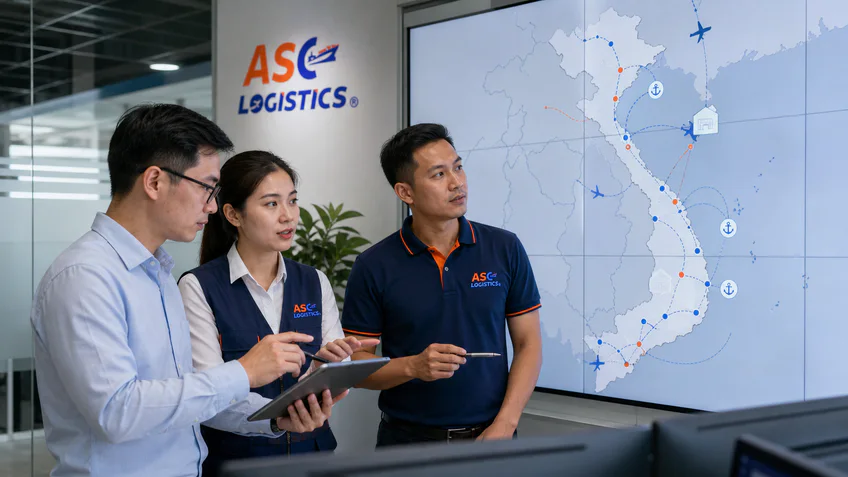
For a logistics company without a branch in Vietnam, ASC Logistics can act as the local operational contact within a defined scope. This may include receiving pre-alerts, coordinating cargo handling, supporting customs processes, arranging inland transport and reporting delivery status to the overseas partner.
What information is required for a freight proposal?
To assess the shipment and reduce quotation revisions, provide:
-
Pickup address or city in China and final delivery location in Vietnam.
-
Incoterms® rule and the agreed division of charges.
-
Cargo name, function, material, model, brand and reference HS code if available.
-
Number and type of packages.
-
Total gross weight, total volume and dimensions of each package.
-
Cargo-ready date and required delivery date.
-
Draft commercial invoice, packing list and contract where available.
-
Special conditions such as dangerous goods, batteries, chemicals, temperature control, oversized cargo or used equipment.
-
Required scope: main carriage only, destination services or delivery to the final warehouse.
Plan the whole shipment, not only the international leg
The most suitable option for shipping from China to Vietnam is the one that meets the delivery requirement, cargo conditions, cost target and Vietnam-side operating requirements at the same time. Road, sea and air freight each have a valid role; the final choice should follow the shipment data rather than a general rule.
For an initial assessment, send ASC Logistics the pickup and delivery points, Incoterms® rule, cargo description, package count, weight, dimensions, cargo-ready date and required delivery date. Contact Mr Nguyen Van Thang via Hotline/WhatsApp at +84 973 266 672 or email thomas@asclogistics.vn.
Frequently asked questions
What is the cheapest way to ship from China to Vietnam?
Should a small shipment move by LCL, LTL or air freight?
Can a freight quote be prepared without an HS code?
Why do two China-to-Vietnam freight quotations differ so much?
What can ASC Logistics handle in Vietnam?
Related Products

Tags: shipping from China to Vietnam